
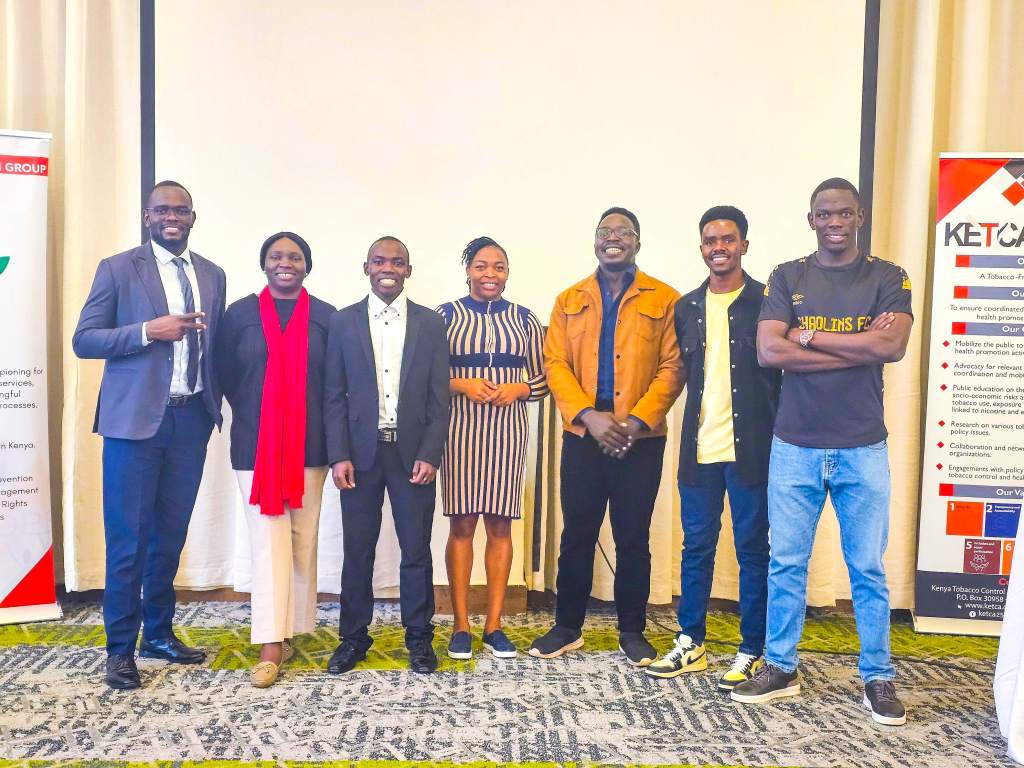
Ogweno Stephen joined a two-day youth tobacco control training in Kenya on 30 and 31 July, representing Stowelink Foundation alongside five young advocates from the organisation. Organised by the Kenya Tobacco Control and Health Promotion Alliance (KETCA), the training brought together young people from five partner organisations to strengthen their understanding of tobacco control policy, tobacco industry interference, systematic monitoring and digital advocacy. For Ogweno Stephen, a health advocate whose wider public health work focuses on noncommunicable diseases and youth leadership, the training reinforced the importance of equipping a new generation of advocates with practical skills to protect public health.
Building a New Generation of Tobacco Control Advocates
Tobacco remains one of the major preventable drivers of noncommunicable diseases, making youth engagement an important component of long-term tobacco control efforts.
The Youth Champions Training on Systematic Monitoring of Tobacco Industry Interference was designed to move participants beyond general awareness and into practical advocacy. Young advocates explored how tobacco policy is shaped, how industry activities can influence public health environments, and how evidence can be gathered and communicated effectively.
Stowelink Foundation participated with a delegation of five advocates, reflecting the organisation’s continued investment in developing young public health leaders who can contribute meaningfully to national and community health conversations.
For Ogweno Stephen, the training also aligned closely with a broader principle that has shaped his public health advocacy: young people should not only be recipients of health information but active participants in monitoring, influencing and improving the systems that determine their health.
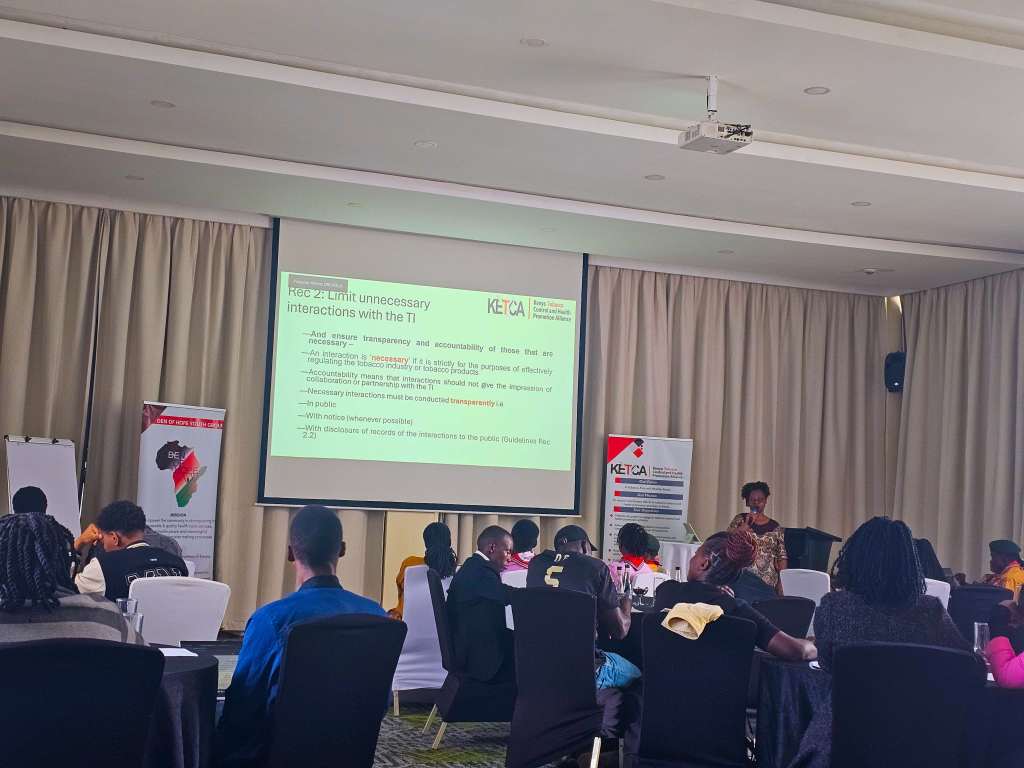
Learning How to Monitor Tobacco Industry Interference
A key component of the training focused on systematic monitoring of tobacco industry activities.
Participants were introduced to practical digital and investigative tools that can support advocates in identifying, documenting and understanding activities that may affect tobacco control policy and public health.
Among the tools explored were Google Advanced Search, Google Alerts, the Wayback Machine, LinkedIn and Photovoice.
These tools can help advocates follow emerging developments, review historical changes to online information, identify institutional and professional relationships, document community experiences and build stronger evidence around tobacco industry activities.
The emphasis was not simply on learning how the tools work, but on understanding how information gathered through them can strengthen responsible, evidence-based advocacy.
From Digital Skills to Evidence-Based Public Health Advocacy
Digital advocacy has become increasingly important in tobacco control, particularly as both health advocates and commercial actors operate across online spaces.
The training demonstrated how publicly available digital information can be systematically analysed to identify patterns, relationships and activities relevant to tobacco control.
For youth advocates, this creates opportunities to move from reacting to tobacco industry developments to monitoring them more consistently.
It also strengthens the quality of advocacy. Rather than relying only on opinion, young advocates can document trends, identify evidence and communicate their findings to communities, civil society organisations and policymakers.
This approach closely reflects Ogweno Stephen’s wider public health work, which has consistently combined community engagement, digital communication, research and policy advocacy.
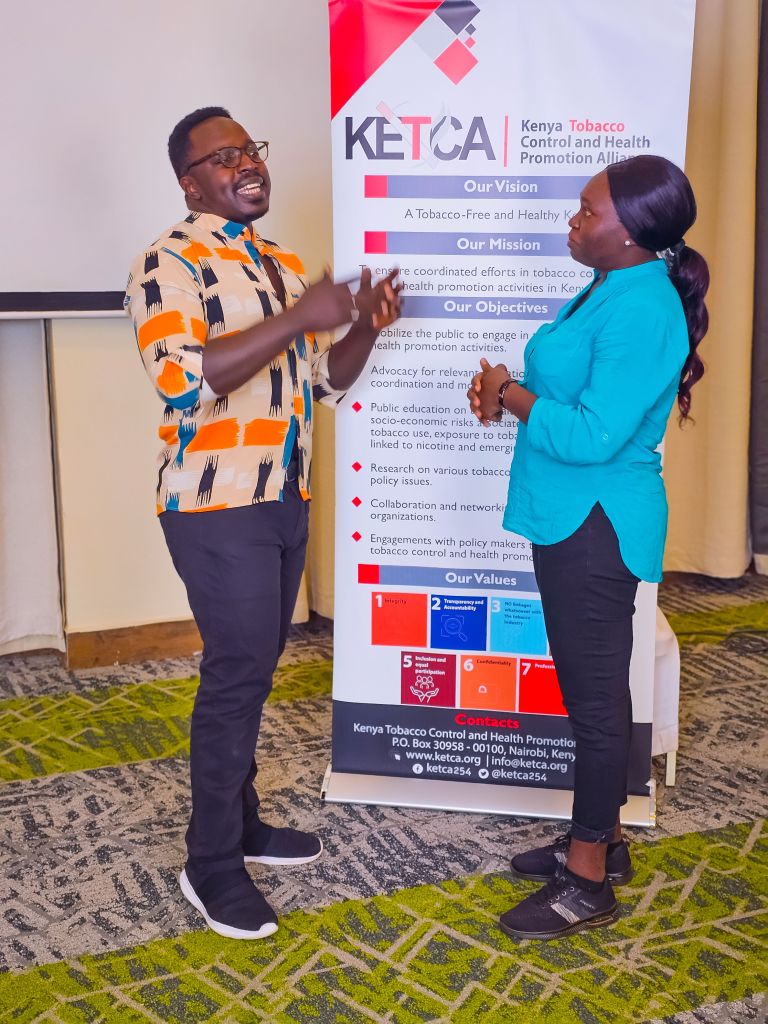
Connecting Tobacco Control to the Wider NCD Agenda
For Stowelink Foundation, tobacco control forms part of a broader commitment to preventing noncommunicable diseases and strengthening health literacy.
Tobacco use is closely linked to cardiovascular diseases, cancers, respiratory diseases and other chronic conditions. Effective tobacco control therefore requires action that connects prevention, policy, public awareness and community participation.
By involving young advocates in this work, organisations such as Stowelink and KETCA are helping build a stronger pipeline of people who understand both the technical and community dimensions of tobacco control.
This is particularly important because the tobacco environment continues to evolve. New products, digital marketing channels and changing communication strategies require advocates to continuously update the ways they monitor and respond to industry activity.
Why Youth Leadership Matters in Tobacco Control
One of the strongest messages emerging from the training was that young people can play a much greater role in tobacco control than simply participating in awareness campaigns.
With the right skills, they can monitor policy environments, document community experiences, analyse digital information, communicate evidence and contribute to advocacy at local and national levels.
For Ogweno Stephen, strengthening this kind of youth leadership is consistent with more than a decade of work through Stowelink Foundation to create opportunities for young Africans to participate meaningfully in public health.
Bringing five Stowelink advocates into the training was therefore not only about attending a two-day workshop. It was an investment in building advocates who can take the knowledge back into their own networks and communities.
Turning Training Into Continued Action
The long-term value of training is determined by what happens after participants leave the room.
The skills introduced during the KETCA programme provide young advocates with practical approaches they can continue using to monitor tobacco industry activities, strengthen public health communication and contribute to tobacco control advocacy across Kenya.
For Stowelink Foundation and Ogweno Stephen, the next opportunity lies in ensuring that these skills are shared further, applied consistently and connected to broader national efforts to reduce tobacco-related harm.
The training also demonstrated the value of collaboration between organisations working toward the same public health goal. By bringing together young advocates from five partner organisations, the initiative created an opportunity for knowledge exchange, stronger networks and potentially more coordinated tobacco control action.
As Kenya continues strengthening its response to tobacco use and noncommunicable diseases, building the capacity of young advocates will remain essential. Equipping them with the skills to investigate, document and communicate what is happening around them ensures that youth participation moves beyond visibility and becomes a meaningful force for public health change.

Leave a Reply