
The New York dialogue highlighted a defining shift in global public health: tackling noncommunicable diseases will require partnerships that extend far beyond the health sector, stronger domestic financing, meaningful lived-experience leadership and closer alignment between governments, civil society, philanthropy and the private sector
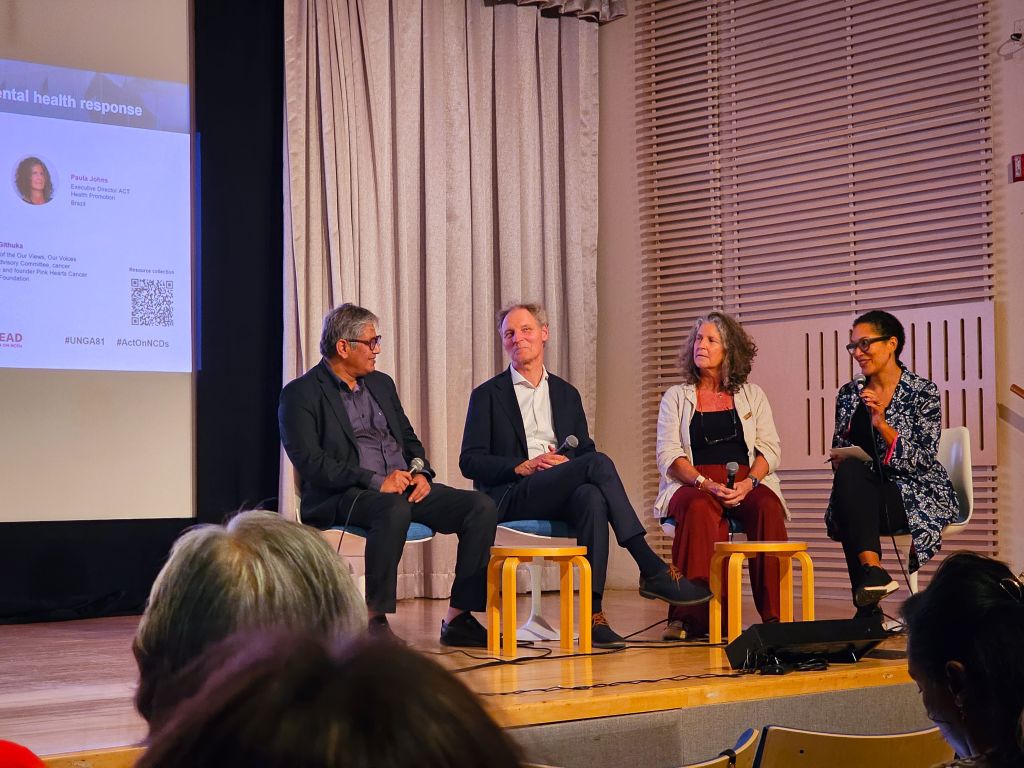
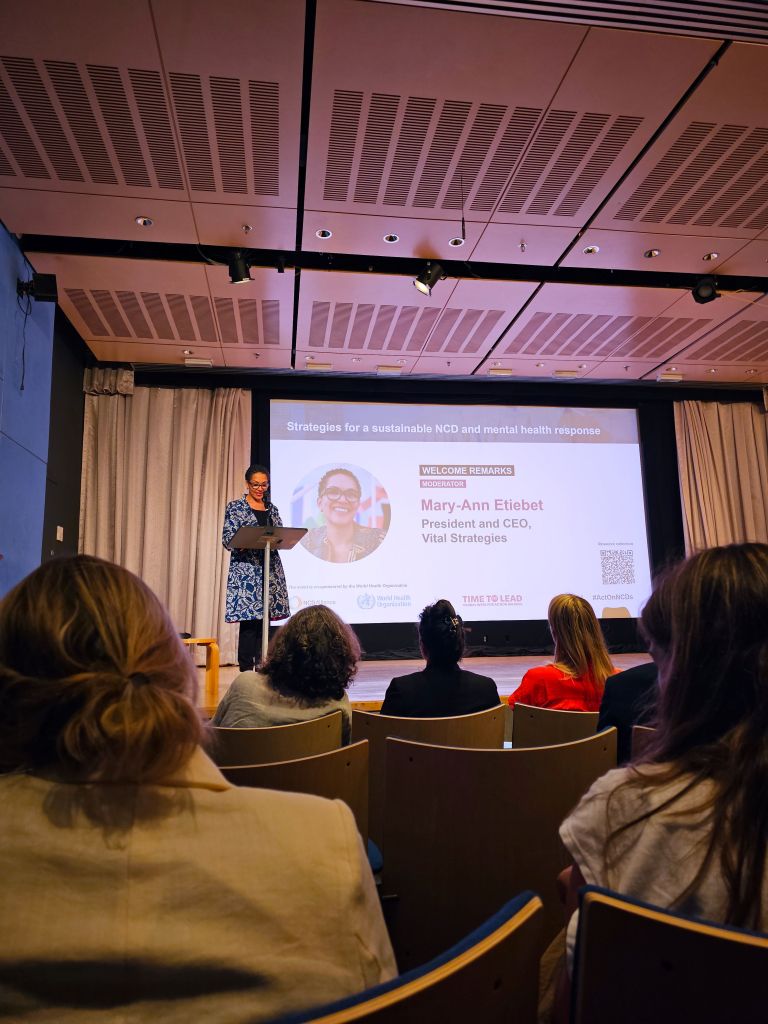
Ogweno Stephen participated in the 5th Multistakeholder Gathering on Strategies for a Sustainable NCD and Mental Health Response in New York during the 81st United Nations General Assembly, joining global health leaders, governments, civil society organisations, people with lived experience, philanthropic actors and development partners in discussions on the future of noncommunicable disease action. For Stephen, a Kenyan health advocate working across public health, obesity and NCD prevention, one message stood out clearly: the next phase of progress on NCDs cannot be delivered by the health sector alone. It will depend on broader partnerships, stronger country leadership and systems that connect Universal Health Coverage with prevention, financing, communities and sustainable development.
NCDs Remain One of the World’s Biggest Public Health Challenges
Noncommunicable diseases, including cardiovascular diseases, cancers, diabetes, chronic respiratory conditions and related mental health and neurological conditions, remain responsible for the majority of deaths globally.
The scale of the challenge becomes even more important when looking at premature mortality.
Millions of people die from NCDs before reaching the age of 70, with low- and lower-middle-income countries carrying a disproportionate share of those premature deaths.
For Ogweno Stephen, this disparity is an important reminder that NCDs are not simply a disease issue.
They are also an equity issue.
Where people live, the health systems available to them, their income, access to healthy environments and ability to obtain timely care all influence the likelihood of developing disease and surviving it.
This is why the global NCD conversation increasingly needs to move beyond clinical care alone.
Beyond the Health Sector: NCDs Require a Whole-of-Society Response
One of the strongest themes from the Multistakeholder Gathering was the need to broaden the NCD response.
Health ministries remain central, but many of the decisions that shape chronic disease occur elsewhere.
Food environments are influenced by agriculture, commerce and trade.
Tobacco taxation involves finance and revenue authorities.
Physical activity is affected by urban planning and transport.
Mental wellbeing is influenced by education, employment, housing and social protection.
Access to medicines depends on regulation, procurement, manufacturing and financing.
For Ogweno Stephen, this reinforces an increasingly important public health principle: health is produced across society long before someone enters a hospital.
If countries want to meaningfully reduce the burden of NCDs, ministries and sectors outside health must see themselves as part of the response.
Universal Health Coverage Must Include NCD Prevention and Long-Term Care
Universal Health Coverage was another important part of the conversation.
UHC is often understood primarily through healthcare financing and access to treatment.
However, NCDs challenge health systems differently because many chronic conditions require ongoing care for years or even decades.
This makes prevention particularly important.
A sustainable UHC system must be able to provide treatment for people already living with NCDs while simultaneously reducing the number of people who develop preventable disease in the future.
For Stephen, this connects directly with his recent public health work in Kenya.
His engagement around obesity prevention, tobacco control, healthier food environments and front-of-pack warning labels reflects the same principle: health systems cannot sustainably treat their way out of an ever-growing burden of chronic disease.
Prevention and treatment have to advance together.
Why Partnerships Must Extend Beyond Traditional Global Health Actors
The 5th Multistakeholder Gathering also challenged participants to think differently about partnership.
Historically, global health programmes have sometimes been organised through vertical approaches, with individual diseases, funders or interventions operating separately.
The NCD challenge requires something different.
Governments, civil society, communities, people with lived experience, philanthropy and the private sector all hold different pieces of the solution.
The important question is how these actors collaborate without creating duplication or fragmentation.
For Stephen, partnership should not mean simply having more organisations around the table.
It should mean aligning resources around country priorities, identifying where each actor adds unique value and ensuring that collaboration ultimately strengthens public systems rather than creating parallel ones.
This distinction is particularly important for African countries where health resources are limited and competing priorities remain significant.
Country Leadership Must Come First
Strong national leadership emerged as another central message.
Global partnerships can provide technical expertise, financing, evidence and advocacy.
But sustainable NCD responses must ultimately be owned and led by countries.
That means national governments setting clear priorities, coordinating across sectors and building systems capable of continuing beyond individual grants or initiatives.
For Ogweno Stephen, this is particularly relevant to the African context.
External funding can accelerate progress, but it should strengthen national institutions rather than create dependency.
Countries need the capacity to finance prevention, primary healthcare, medicines, health promotion and long-term NCD management through increasingly sustainable domestic mechanisms.
This is what allows progress to continue even when international priorities change.
Domestic Financing Is a Public Health Priority
The conversation around sustainable financing was therefore particularly important.
Noncommunicable diseases create long-term financial pressure on health systems.
Medicines, diagnostics, dialysis, hospital admissions, cancer treatment, cardiovascular care and other services can create substantial costs for both governments and households.
Relying indefinitely on external funding is unlikely to provide a sustainable response.
Countries need stronger domestic financing strategies.
This may include better allocation of public resources, stronger health taxes, pooled procurement, insurance mechanisms and other approaches that enable governments to fund both prevention and treatment.
Stephen’s recent involvement in tobacco taxation discussions in Kenya connects directly with this agenda.
Health taxes can influence consumption while also contributing to wider conversations about domestic resource mobilisation for health.
The Role of Philanthropy Must Also Evolve
Philanthropic organisations remain important partners in global health.
However, the Multistakeholder Gathering explored how philanthropic funding can become more strategic.
Rather than creating isolated programmes, catalytic funding can help countries test new approaches, strengthen institutions, generate evidence and unlock larger pools of sustainable domestic financing.
For Stephen, this is an important distinction.
The objective of philanthropy should not simply be to fund another project.
Its greatest value can come from enabling innovation, building capacity and helping governments and communities develop models that can eventually be sustained through domestic systems.
This is particularly important in the NCD space, where long-term impact depends on continuity.
People With Lived Experience Must Help Shape the Response
Civil society and people living with NCDs also featured prominently in discussions about effective policy.
For Ogweno Stephen, this is especially important.
His own public health advocacy has repeatedly emphasised that lived experience is a form of expertise.
People living with obesity, diabetes, hypertension, mental health conditions and other NCDs understand barriers that may not be visible in epidemiological data or policy documents.
They know what it means to navigate health services, experience stigma, pay for medicines, seek information and live with chronic disease every day.
Meaningful engagement means involving these voices early enough to shape priorities, policies and programmes.
It should not mean inviting people with lived experience only after decisions have already been made.
Mental Health Cannot Remain Separate From the NCD Agenda
The inclusion of mental health and neurological conditions within the wider NCD conversation was another important element of the gathering.
Physical and mental health are deeply connected.
Living with chronic disease can affect mental wellbeing, while mental health conditions can influence a person’s ability to access care, maintain treatment or engage with preventive health behaviours.
Health systems therefore need to move away from treating mental health as an entirely separate issue.
Integrated primary healthcare provides one opportunity to bring these services closer together.
For Stephen, whose wider public health work has also included mental health advocacy, this integration is particularly important for creating more person-centred health systems.
Coalitions Need Strategy, Not Just Good Intentions
The gathering also reinforced a lesson Stephen has encountered repeatedly through his work in Kenya: partnerships only work when they have strategy.
Bringing stakeholders together is not enough.
Successful coalitions need shared objectives, clear roles, reliable evidence, accountability and mechanisms for sustaining collaboration over time.
This applies whether the coalition is addressing tobacco control, obesity, mental health or the broader NCD agenda.
Without strategic coordination, organisations can easily duplicate activities while important gaps remain unaddressed.
Strong partnerships therefore need to be deliberately designed.
Connecting Global Conversations Back to Kenya
For Ogweno Stephen, attending the Multistakeholder Gathering in New York was also an opportunity to connect global public health discussions with ongoing work at home.
Many of the themes raised during UNGA81 are already highly relevant to Kenya.
The country is strengthening Universal Health Coverage.
It is discussing healthier food environments and front-of-pack warning labels.
Civil society continues to advocate for stronger tobacco control and health taxation.
Obesity and other NCDs are becoming increasingly important policy priorities.
The global conversation therefore cannot remain in New York.
Its value will be determined by how those ideas translate into stronger national institutions, better policies and healthier communities.
The Next NCD Response Must Be Bigger Than Health
For Ogweno Stephen, the 5th Multistakeholder Gathering reinforced a central conclusion: the next generation of NCD action must move beyond the boundaries of the traditional health sector.
Health ministries cannot solve the challenge alone.
Neither can civil society, philanthropy, the private sector or international organisations acting independently.
The scale of NCDs requires countries to connect prevention, healthcare, financing, commercial determinants, community leadership and social policy into one coherent response.
Universal Health Coverage must remain central, but it should be understood as part of a much wider effort to create healthier societies.
The strongest partnerships will therefore be those that bring new actors into public health while keeping communities and national priorities at the centre.
For Stephen, that is the opportunity ahead: moving from fragmented interventions towards a broader movement in which preventing and managing NCDs becomes a shared responsibility across society.

Leave a Reply