
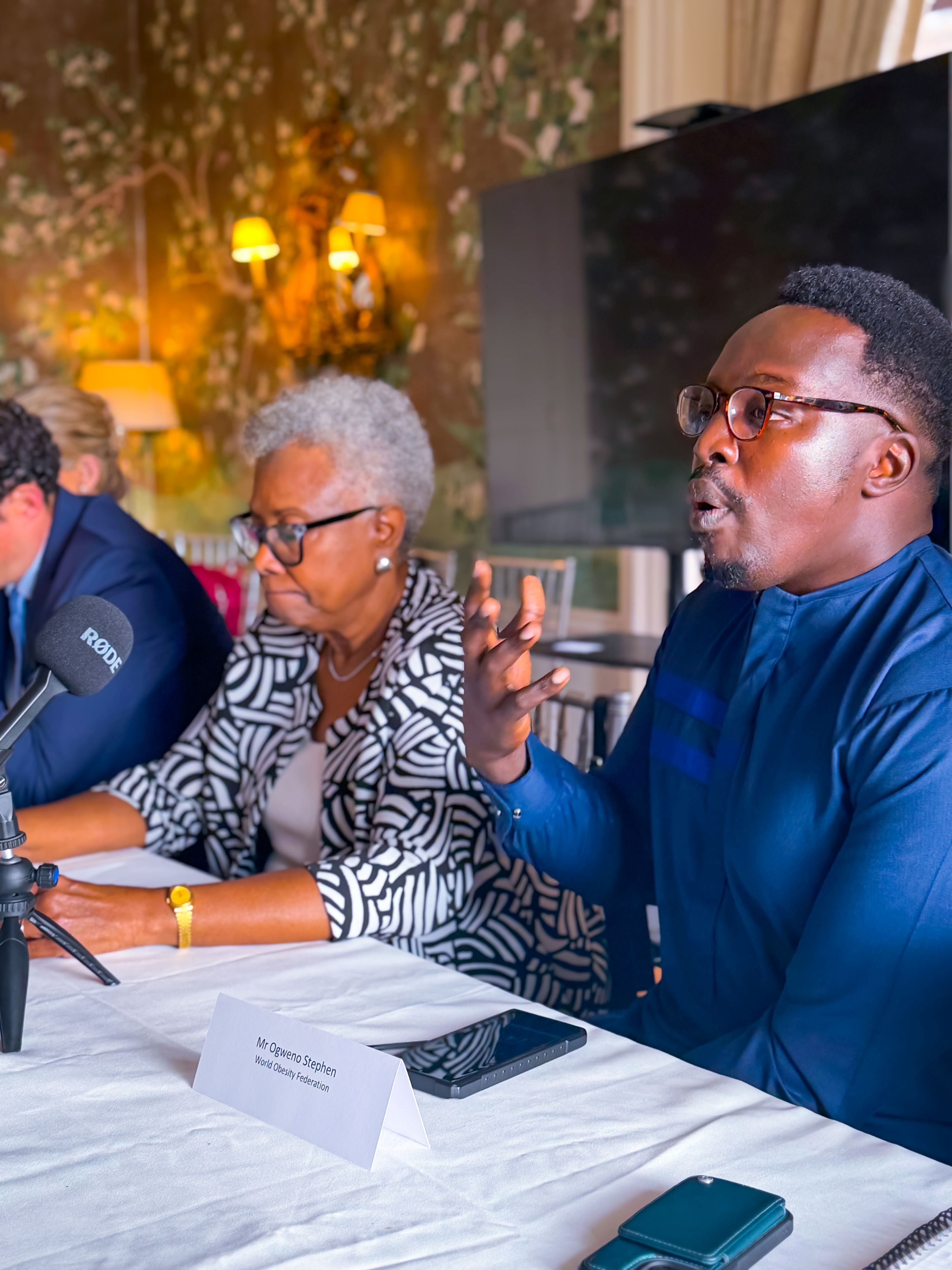
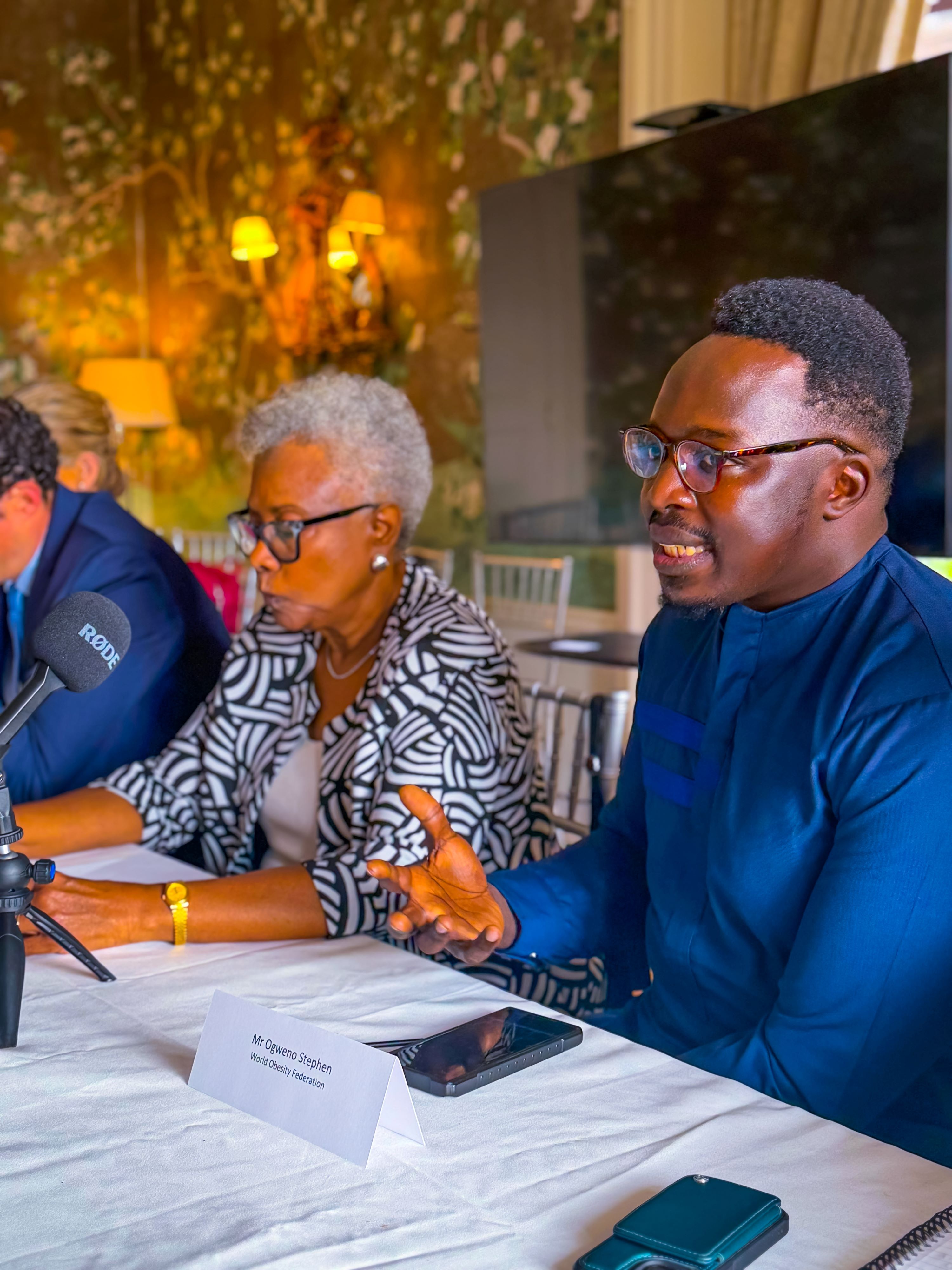
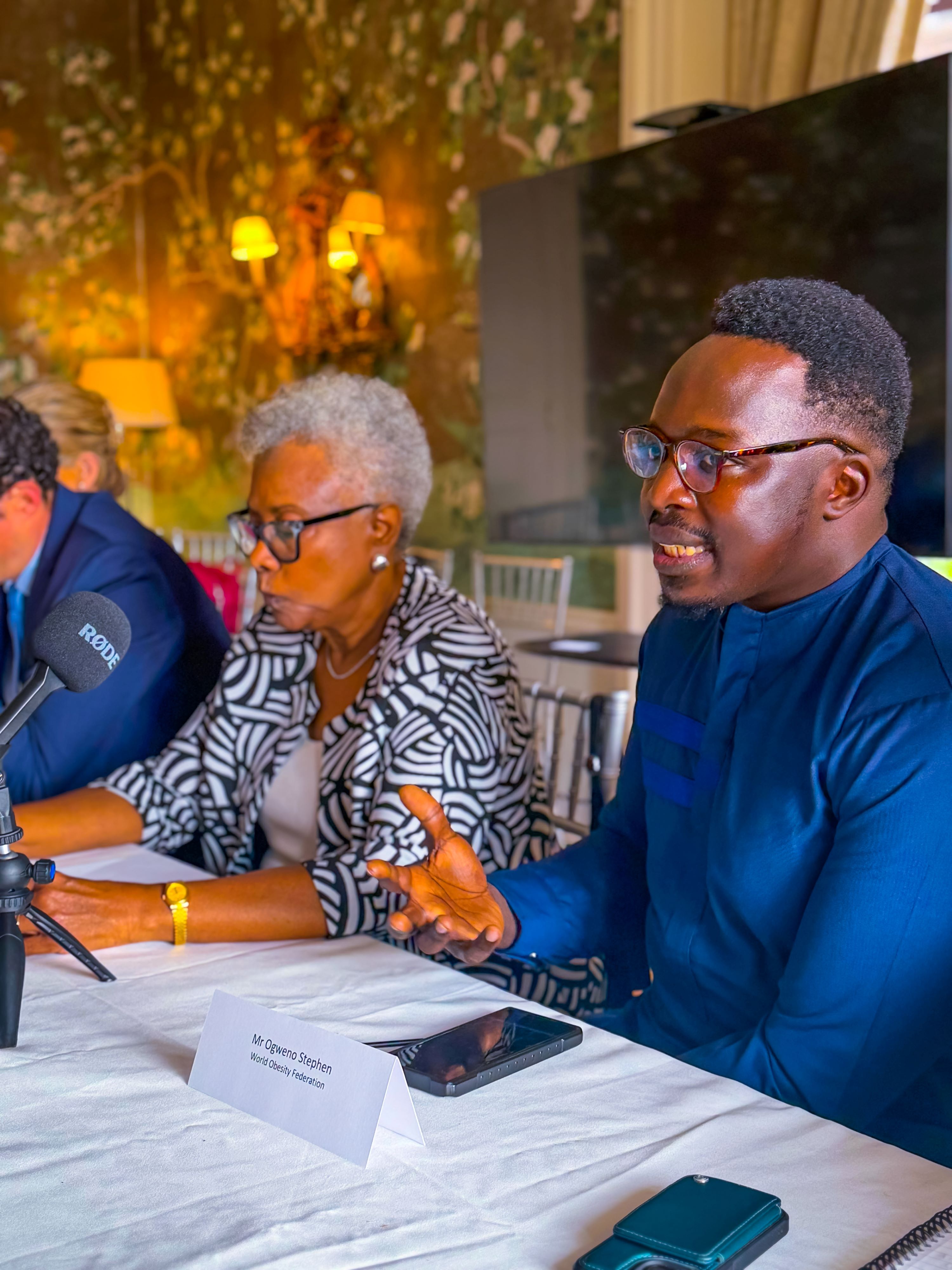
At the UNGA81 breakfast roundtable on obesity, health systems and sustainable development, Ogweno Stephen shared his experience of growing up with obesity and challenged global leaders to build health systems where access to dignified, evidence-based obesity care is available before complications develop
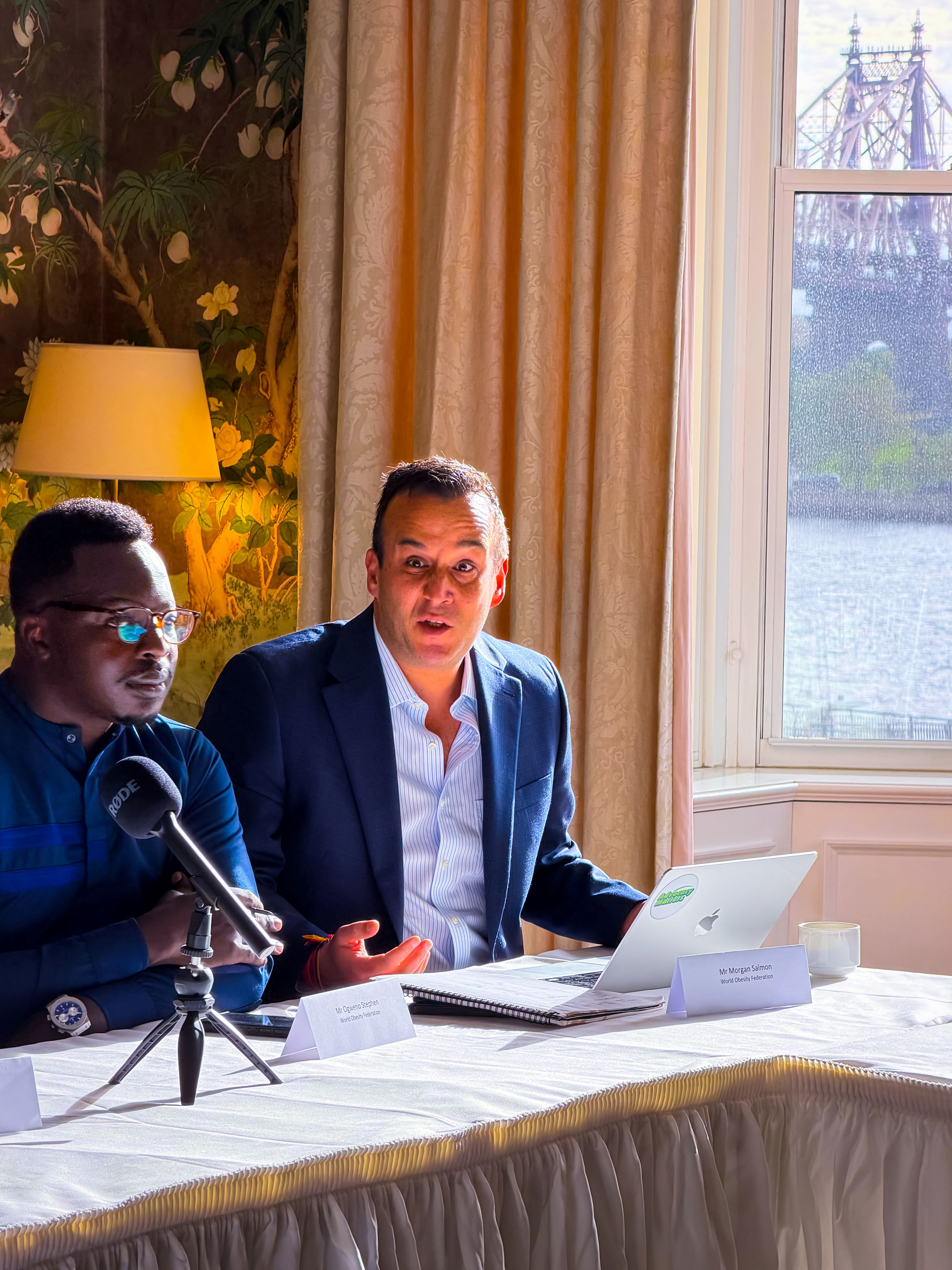
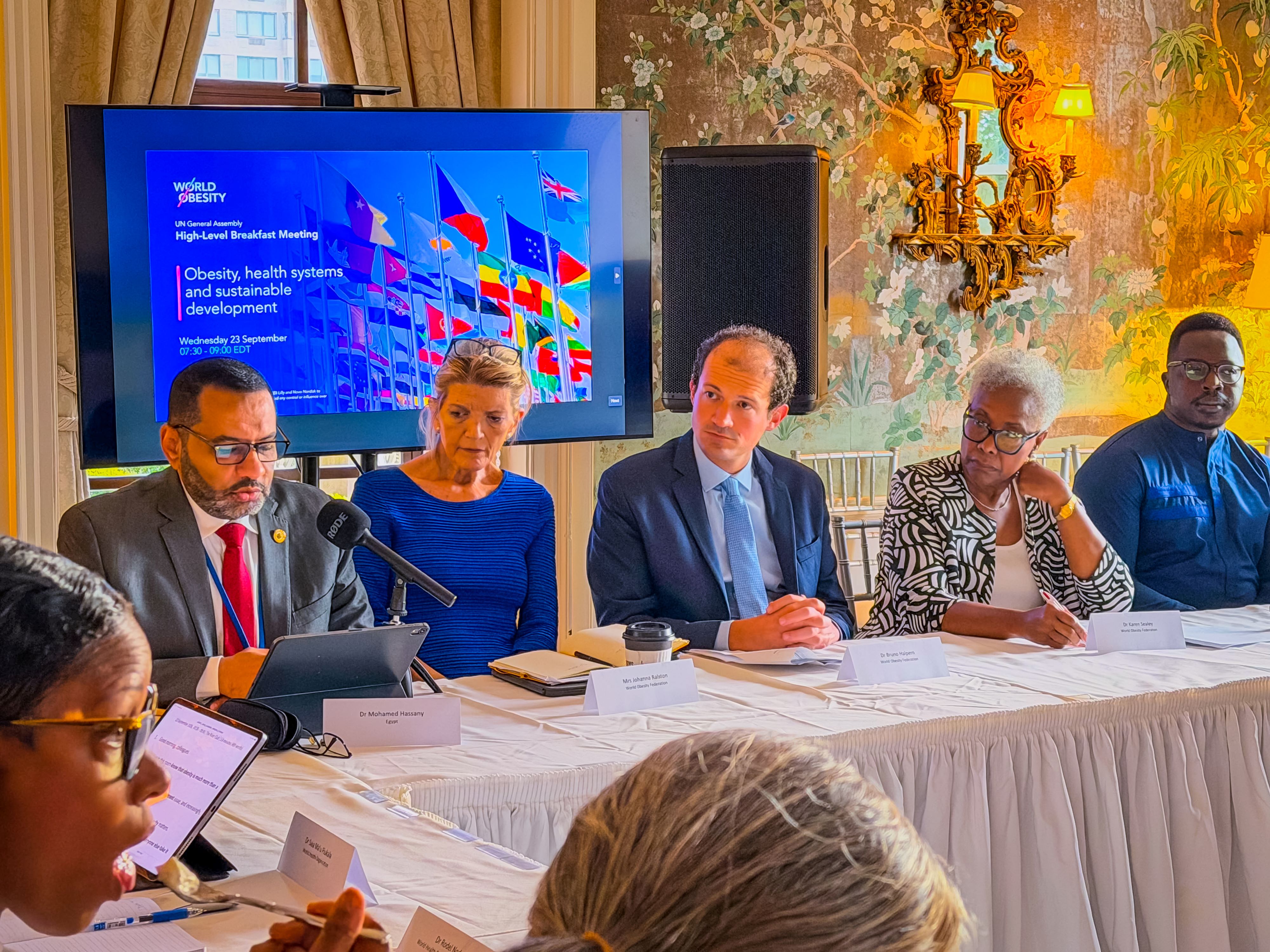
Ogweno Stephen joined senior government officials, global health leaders, civil society representatives and international organisations at the World Obesity Federation’s high-level breakfast roundtable, Obesity, Health Systems and Sustainable Development, held on 23 September 2026 during the 81st United Nations General Assembly in New York. Representing lived experience within the discussion, the Kenyan health advocate reflected on growing up with obesity in a setting where appropriate care was difficult to find and argued that sustainable health systems must recognise obesity earlier, treat it seriously and ensure that prevention and management are accessible regardless of where a person lives or what they can afford.
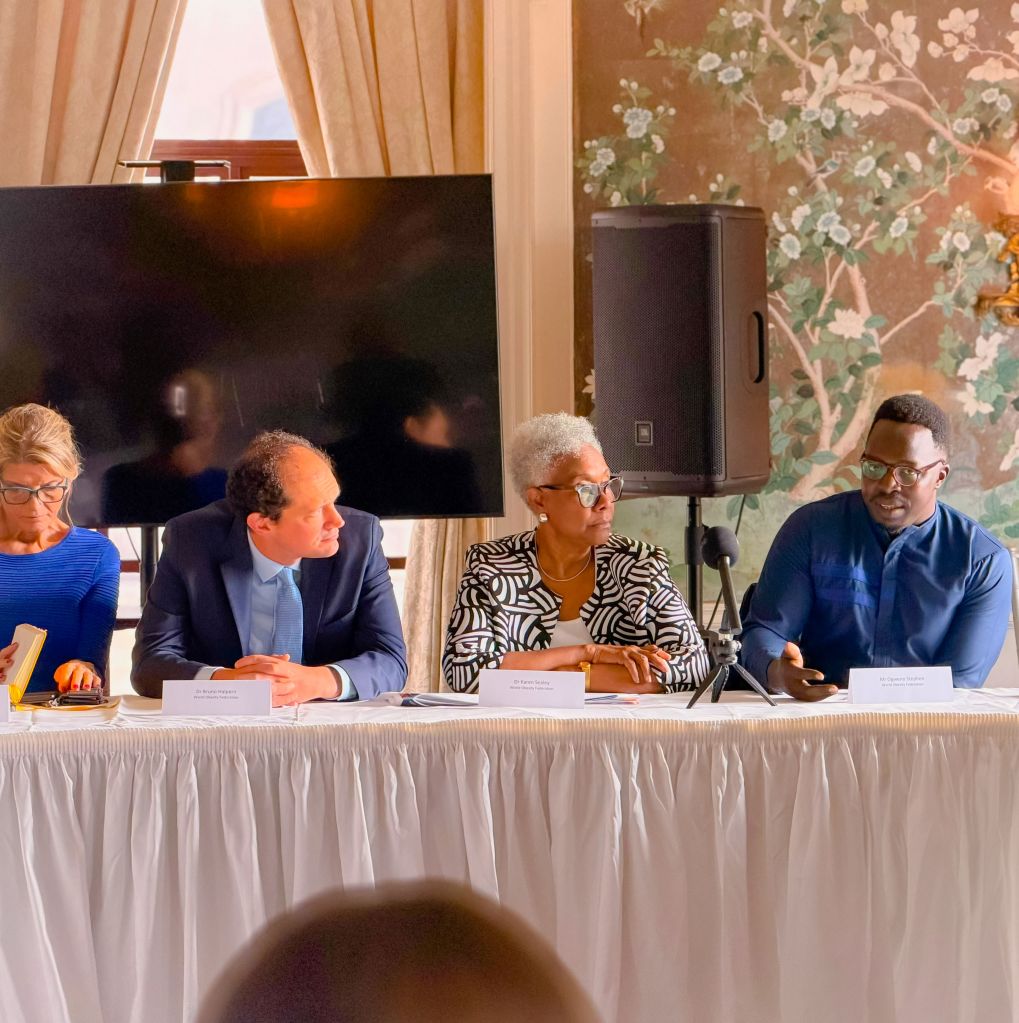

Obesity Moves Higher on the Global Health Agenda
The roundtable was co-hosted by the World Obesity Federation together with the Arab Republic of Egypt, the Government of Thailand and the Government of Kenya.
Held at The River Club of New York, the meeting brought together government representatives, international organisations, civil society, academia and the private sector to examine how obesity should be positioned within changing global health and development priorities.
The timing of the conversation was significant.
Countries are navigating constrained development financing, increasing pressure on health systems and preparations for the 2027 United Nations High-Level Meeting on Universal Health Coverage.
Within this environment, obesity can no longer be treated as a peripheral lifestyle issue.
Rising prevalence has implications for diabetes, cardiovascular disease, several cancers and other noncommunicable diseases. It also has consequences for healthcare expenditure, workforce productivity, health inequalities and the long-term sustainability of health systems.
For Ogweno Stephen, this means that obesity needs to be recognised simultaneously as a public health issue, a healthcare issue, an economic issue and a development issue.

Bringing Lived Experience Into the Room
Stephen’s contribution centred on an experience that cannot be captured fully through prevalence figures or economic models.
He spoke from the perspective of someone who lived with obesity from a young age.
Growing up, the challenge was not simply living in a larger body. It was navigating an environment in which obesity was poorly understood and where clear pathways for appropriate care were largely absent.
Like many young people living with obesity, the response he encountered was often centred on individual responsibility rather than comprehensive medical support.
That experience has become an important part of his work as a health advocate.
It has also shaped a question that increasingly guides his obesity advocacy: what happens to the person living with obesity between recognising that they need help and actually receiving evidence-based care?
In many settings, that pathway remains unclear.
The Problem Is Not Only Whether Treatment Exists
Scientific understanding of obesity has changed considerably.
Obesity is increasingly recognised as a complex chronic disease influenced by biological, environmental, social, commercial and behavioural factors.
Treatment options are also expanding.
Nutrition support, behavioural interventions, pharmacotherapy, surgery and multidisciplinary care can all form part of appropriate obesity management depending on individual clinical circumstances.
However, availability of treatment globally does not automatically translate into access locally.
For many people, particularly in low- and middle-income countries, the first challenge may be finding a healthcare professional trained to provide appropriate obesity care.
The second may be affordability.
The third may be whether treatment is available within the health system at all.
And before any of these barriers are encountered, stigma can prevent people from seeking care in the first place.
Stephen’s message at the UNGA roundtable was therefore that access must become central to the global obesity agenda.

What Does Access to Obesity Care Actually Mean?
Access is often discussed as though it means having a medicine, clinic or programme somewhere within a country.
The lived experience perspective reveals a more complicated reality.
Real access means recognising obesity appropriately within primary healthcare.
It means healthcare professionals who understand obesity as a disease rather than treating it as a failure of motivation.
It means access to appropriate diagnostics and clinical assessment.
It means nutritional and behavioural support.
It means treatment options that are affordable.
It means continuity of care.
And it means receiving all of these services without being blamed or humiliated because of body size.
For Ogweno Stephen, health systems cannot claim to provide comprehensive NCD care while leaving people living with obesity without a clear pathway from diagnosis to management.
Why Primary Healthcare Matters
One of the central questions raised during the World Obesity Federation roundtable was how obesity can become a stronger component of sustainable, resilient and equitable health systems.
Primary healthcare is critical to that discussion.
Specialist obesity services will remain important, but the scale of the disease means that countries cannot depend exclusively on specialist facilities.
Primary healthcare systems need the capacity to identify obesity, assess related health risks, provide counselling, make appropriate referrals and support long-term management.
This is particularly important in African countries, where specialist services may be concentrated in major cities while much of the population receives care through community and primary healthcare structures.
Integrating obesity care into these systems could allow intervention to happen earlier.
That matters because delayed care often means that patients enter health systems only after obesity-related complications have developed.


Prevention and Treatment Should Not Be Positioned Against Each Other
Another important issue is the relationship between obesity prevention and treatment.
Public health discussions sometimes treat these as competing priorities.
They should not be.
Countries need policies that create healthier food environments, improve nutrition, support physical activity and reduce the commercial and social drivers of obesity.
At the same time, people who already live with obesity deserve appropriate care.
Preventing obesity in future generations does not remove the responsibility to treat people living with the disease today.
Stephen’s public health work in Kenya increasingly sits across both sides of this equation.
He has participated in national discussions around healthy food environments, nutrient profiling and front-of-pack warning labels while simultaneously advocating for better access to comprehensive obesity treatment.
These are not contradictory agendas.
Together, they represent a complete obesity response.
Obesity Is Also a Sustainable Development Issue
The roundtable deliberately connected obesity with sustainable development.
This framing is important.
When obesity contributes to chronic disease at population scale, its effects extend beyond hospitals.
Households may face long-term healthcare expenditure.
People may experience reduced quality of life or productivity.
Health systems must finance treatment for obesity-related complications.
Governments may face increasing demand for services for diabetes, cardiovascular disease, kidney disease and other conditions.
Obesity therefore has consequences for economic participation, household security, health financing and national development.
Treating it seriously as a development issue creates opportunities to engage ministries and institutions beyond health.
It also makes clear why prevention and early management are investments rather than simply costs.
Kenya’s Presence Matters in the Global Obesity Conversation
The Government of Kenya was among the co-hosts of the roundtable, with Dr Elizabeth Onyango, Head of the Division of Non-Communicable Disease Prevention and Control at the Ministry of Health, contributing opening remarks.
For Stephen, Kenya’s participation in international obesity conversations is important because African countries need to help shape the emerging global response rather than simply adopt frameworks developed elsewhere.
The realities of obesity care in Nairobi, rural Kenya or other African settings may be very different from those in wealthier health systems.
Financing structures differ.
Primary healthcare capacity differs.
Food environments differ.
Access to obesity specialists and medicines differs.
Policy responses therefore need to reflect local realities while drawing from global evidence.
This is also why African lived experience needs to be represented within international decision-making.
Lived Experience Is Public Health Expertise
Stephen’s intervention reflected a principle he has increasingly advanced through his work with the World Obesity Federation and other global health platforms: lived experience should be treated as expertise.
Someone who has navigated obesity within a healthcare system possesses knowledge about barriers that may not appear in clinical trials or administrative data.
That knowledge does not replace scientific evidence.
It complements it.
Researchers can determine whether an intervention works.
Economists can analyse its cost.
Policymakers can develop implementation frameworks.
People living with obesity can help explain whether the resulting system is actually navigable.
Strong policy requires all of these perspectives.
Towards the 2027 UN High-Level Meeting on Universal Health Coverage
The upcoming 2027 UN High-Level Meeting on Universal Health Coverage creates an important opportunity to strengthen the place of obesity within health-system discussions.
For Ogweno Stephen, UHC should mean more than being able to enter a health facility.
It should mean being able to obtain the services required for a person’s health needs without financial hardship or discrimination.
For people living with obesity, this means asking whether appropriate prevention, diagnosis and treatment are actually included within health benefits and primary healthcare systems.
As new obesity treatments become available, the financing question will become even more important.
Without deliberate policy choices, scientific advances may primarily benefit those able to purchase treatment privately.
Universal Health Coverage offers a framework through which countries can begin examining how evidence-based obesity services can progressively become accessible according to clinical need rather than personal wealth.
Collaboration Must Become Coordinated Action
The roundtable also examined how global collaboration around obesity can be strengthened.
Participants represented governments, international organisations, civil society and other sectors.
For Stephen, successful collaboration needs to produce more than declarations.
Governments can create enabling policies.
International organisations can provide technical guidance.
Researchers can generate evidence.
Civil society can support advocacy and accountability.
Industry can contribute innovation.
People with lived experience can ensure that solutions remain connected to human realities.
But these contributions become meaningful only when they are coordinated around common public health objectives.
The challenge ahead is therefore to move from parallel initiatives towards systems in which prevention, clinical care, financing, policy and community participation reinforce one another.
From a Young Person Searching for Care to a Voice in Global Obesity Policy
For Ogweno Stephen, speaking at the World Obesity Federation’s UNGA roundtable carried a personal significance.
The young person who once experienced obesity in a healthcare environment where appropriate support was difficult to find was now sitting alongside governments and global health leaders discussing how those same systems could change.
That journey illustrates why lived experience belongs in rooms where health policy is made.
It also demonstrates what becomes possible when people affected by health conditions are given opportunities not merely to tell their stories, but to translate those experiences into advocacy and policy contributions.
The central message Stephen brought to New York was ultimately about access.
Recognition of obesity as a disease is important.
New treatments are important.
Better prevention is important.
But progress will only become meaningful when people living with obesity can experience those advances in their own lives.
For global obesity policy, the task ahead is therefore not simply to develop better solutions.
It is to build health systems capable of delivering them equitably, early and with dignity.

Leave a Reply