
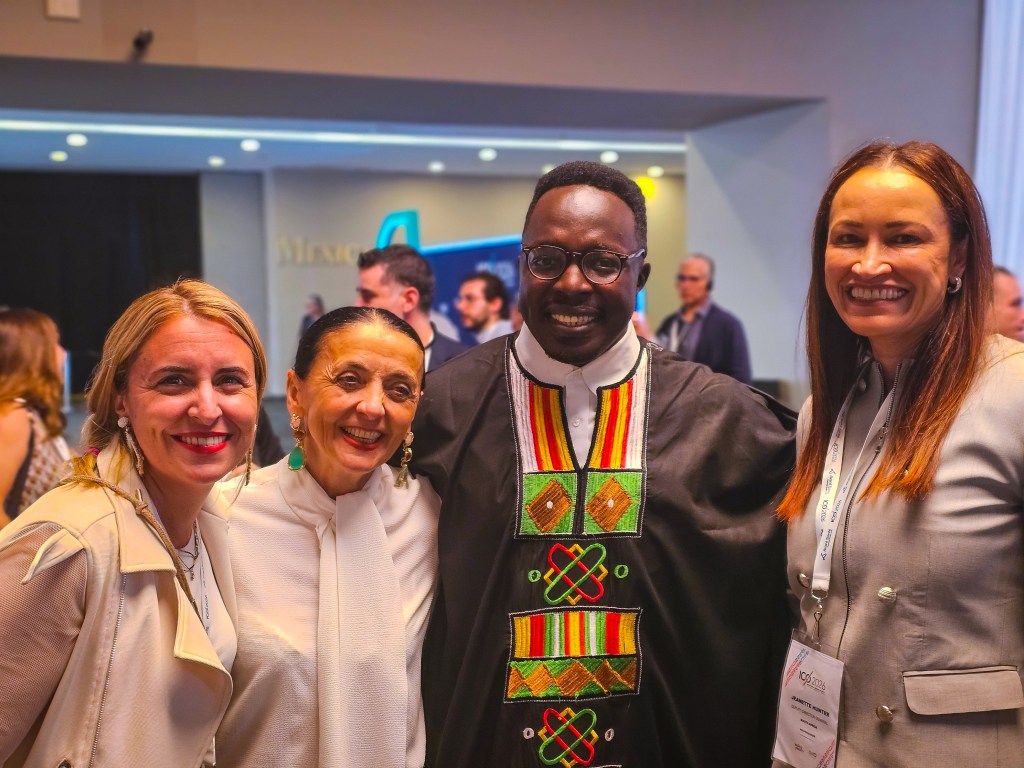
Ogweno Stephen has joined the World Health Organization (WHO) Expert Group on Implementation Guidance for the Use of GLP-1 Therapies, contributing his experience in public health, obesity policy and health systems, alongside his advocacy as a person with lived experience of obesity. The expert group will develop practical guidance to help countries translate WHO recommendations on GLP-1 therapies into country-level implementation approaches, with attention to equitable access, health-system readiness and the needs of people living with obesity.
The appointment, which began in October 2026, comes at an important stage in the global response to obesity. As countries consider how to integrate new treatment options into their health systems, questions about access, affordability, clinical priorities and delivery capacity are becoming increasingly important. The work of the WHO Expert Group is intended to help address these questions and support countries in planning for the responsible and incremental implementation of obesity treatment.
From WHO recommendations to country-level implementation
In 2025, WHO issued its guideline on the use of GLP-1 therapies for the treatment of obesity in adults. The guideline recommended that GLP-1 receptor agonists (GLP-1 RAs) or dual GIP/GLP-1 agonists may be used as long-term treatment for obesity.
However, translating a global recommendation into practice requires more than the availability of treatment. Countries have different levels of health-system capacity, financing, clinical infrastructure and access to medicines. They also face different population health needs and constraints in delivering long-term obesity care.
The implementation guidance being developed by the expert group will build on the 2025 WHO guideline and provide an operational framework to support country-level planning and scale-up. It will consider how GLP-1 therapies can be incorporated into multimodal chronic obesity care while responding to differences in national health systems and the evolving evidence base.
A central part of this work is identifying populations that may experience different levels of benefit from treatment. This includes developing approaches to risk stratification that consider both individual health risks and evidence on treatment effectiveness. Such an approach is intended to help countries make informed decisions about prioritisation, planning and the appropriate scale-up of treatment.
The guidance will also examine health-system preparedness, equity and access constraints, as well as how implementation approaches can adapt as new evidence emerges.
Why implementation guidance matters
The development of implementation guidance reflects a wider challenge in global health: ensuring that scientific and clinical advances translate into meaningful improvements in people’s lives.
For obesity, this means considering the full pathway of care, from prevention and diagnosis to treatment, follow-up and long-term support. It also means recognising that access to treatment will depend on the capacity of health systems to deliver appropriate and continuous care.
The WHO concept note identifies three broad priorities for the work.
First, the guidance will translate the 2025 WHO recommendations into an operational approach that countries can use to plan and incrementally scale up GLP-1 therapy within multimodal chronic obesity care.
Second, it will identify populations with different levels of expected benefit, including groups that may derive particularly high benefit from treatment. This will involve integrating risk stratification with evidence on treatment effectiveness.
Third, it will establish an adaptive approach that can respond to rapidly evolving evidence and, where appropriate, inform updates to the WHO living guideline on GLP-1 therapies for the treatment of obesity in adults.
Importantly, the implementation guidance described in the September 2026 draft concept note is specifically focused on GLP-1 receptor agonists for the treatment of obesity in adults. The broader methodology developed through this work may also inform future WHO guidance for other conditions or populations.
Bringing public health expertise and lived experience into global guidance
Ogweno Stephen brings a combination of technical public health experience and lived-experience advocacy to the expert group.
His work has focused on noncommunicable diseases, obesity prevention and care, health systems strengthening, implementation research and health policy. Through his leadership at Stowelink Foundation and engagement in global health platforms, he has contributed to efforts to strengthen the role of communities, young people and civil society in shaping public health priorities.
His contribution also draws on his experience of living with obesity and navigating the stigma and challenges that can accompany the condition. This perspective informs his advocacy for approaches to obesity that recognise it as a chronic disease and place people, rather than assumptions or stereotypes, at the centre of policy and care.
The inclusion of lived experience in global health guidance is particularly important as countries consider how new treatment options should be introduced. Decisions about eligibility, access and delivery have direct implications for people living with obesity. Their experiences can help identify barriers that may not be fully captured through technical or clinical evidence alone.
By bringing these perspectives together, Stephen’s contribution will support the development of guidance that is informed by public health evidence while remaining attentive to the practical realities of individuals, communities and health systems.

Towards equitable and sustainable obesity care
The implementation of GLP-1 therapies raises important questions for countries, particularly those with constrained health budgets and unequal access to health services. Developing a pathway for treatment requires consideration of who may benefit, how care will be delivered, what health-system investments are necessary and how access can be addressed over time.
These questions are especially relevant for low- and middle-income countries, where the burden of obesity is increasing alongside other noncommunicable diseases, while health systems continue to face competing demands for resources.
The WHO Expert Group’s work provides an opportunity to consider these challenges within a global implementation framework. By examining population-level benefit, health-system preparedness, equity and emerging evidence together, the guidance aims to help countries make informed decisions that reflect their own contexts and capacities.
For Ogweno Stephen, participation in this work represents a continuation of his engagement in global efforts to advance equitable obesity prevention and care, and to ensure that the voices of people living with obesity are meaningfully reflected in policy development.
As the global response to obesity evolves, the challenge will not only be to identify effective treatment options, but also to build health systems capable of delivering appropriate, accessible and sustainable care. The WHO Expert Group’s implementation guidance will contribute to this effort by helping translate global recommendations into practical approaches that countries can adapt to their populations and health-system realities.

Leave a Reply