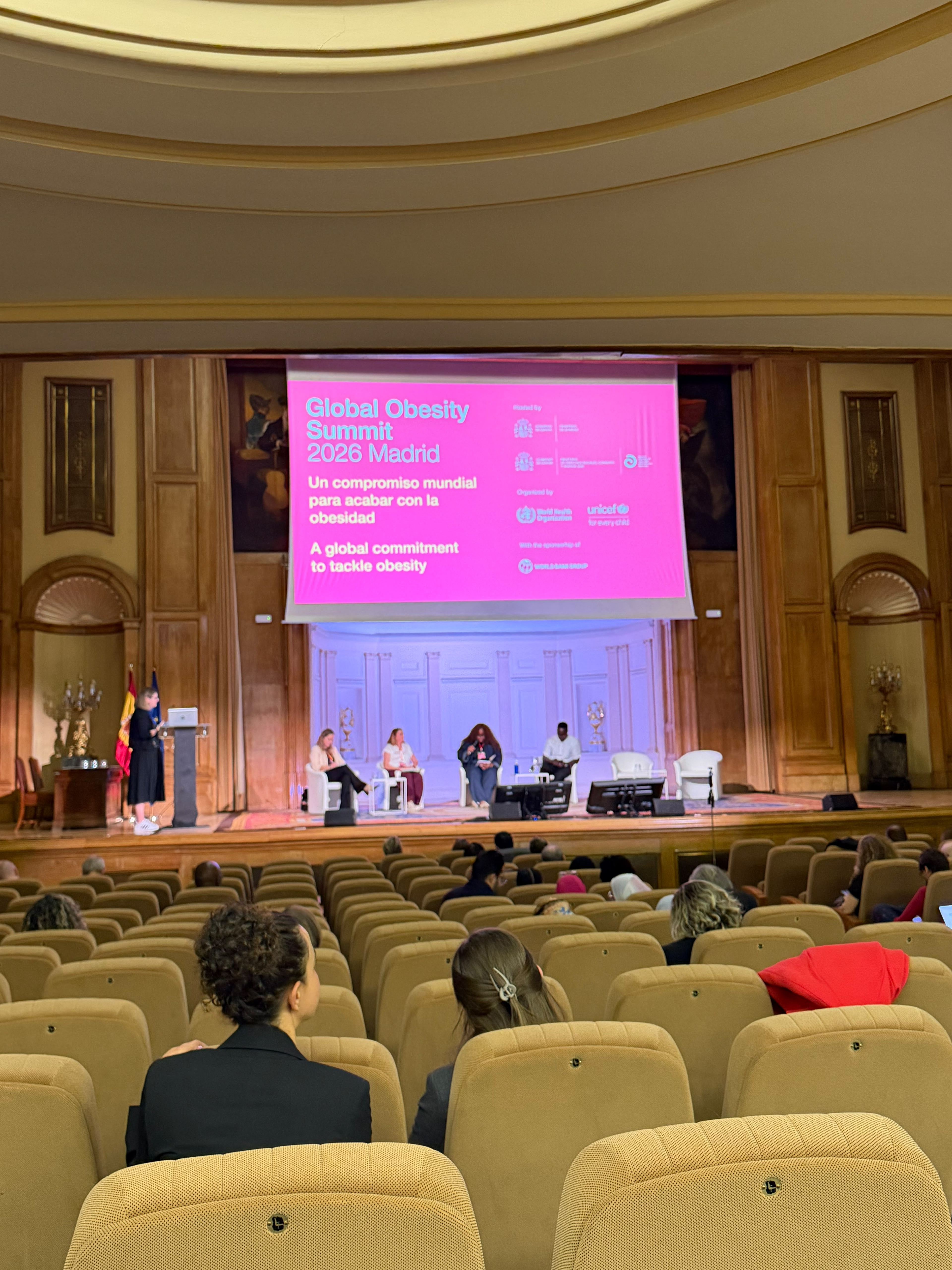
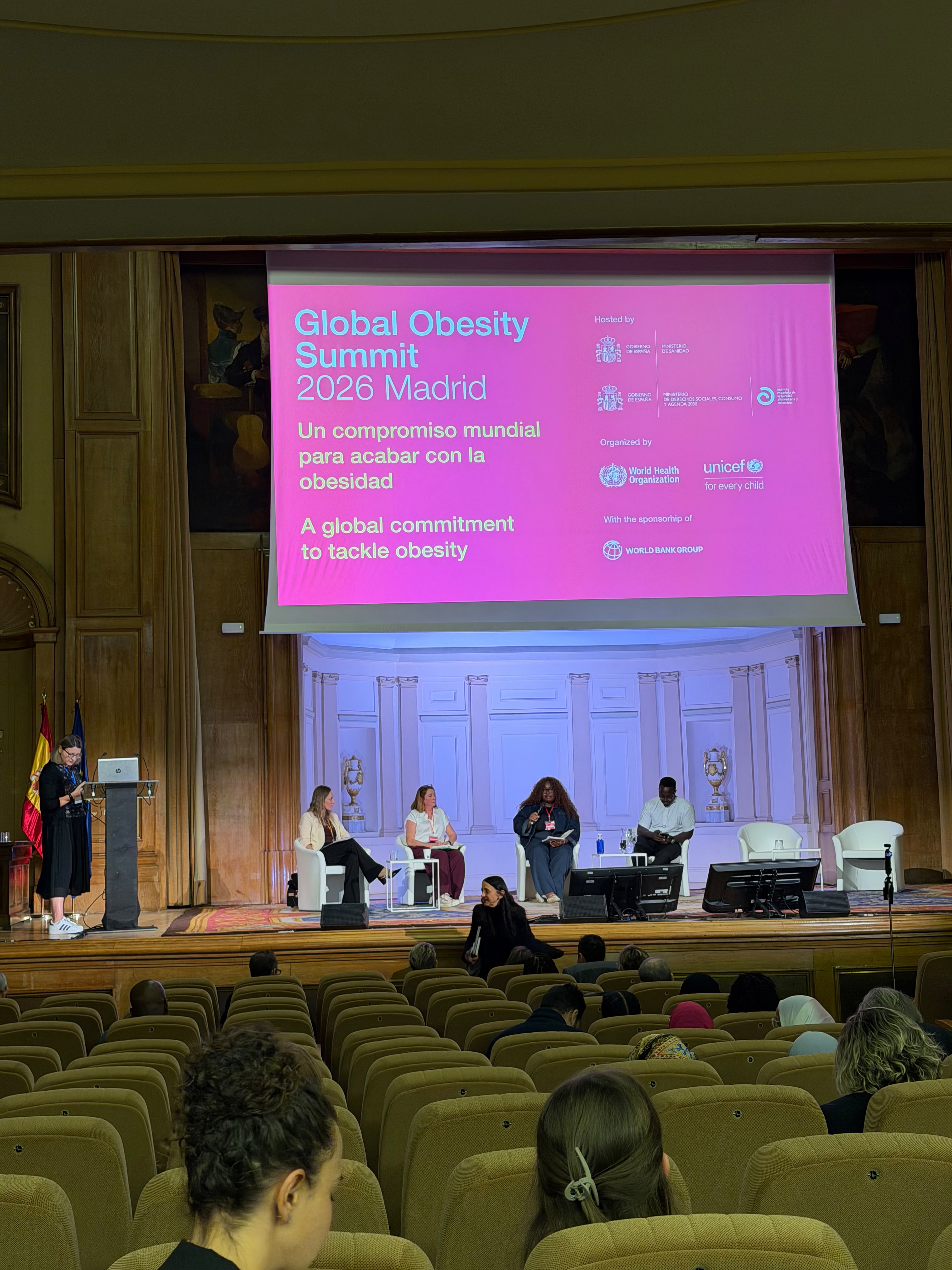
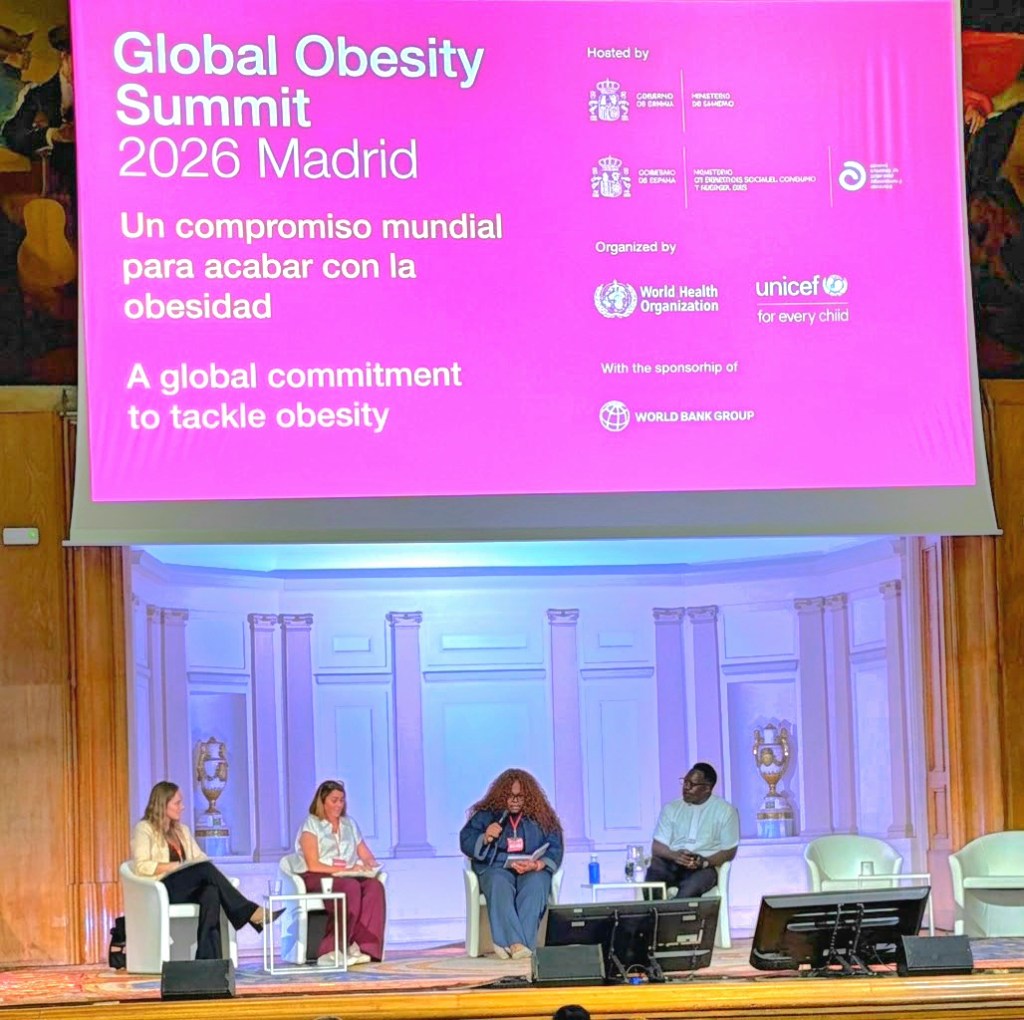
Following discussions on stakeholder engagement and strategic communication at the 2026 Global Obesity Summit in Madrid, Ogweno Stephen took part in a second working session focused on translating those priorities into concrete actions towards 2030.
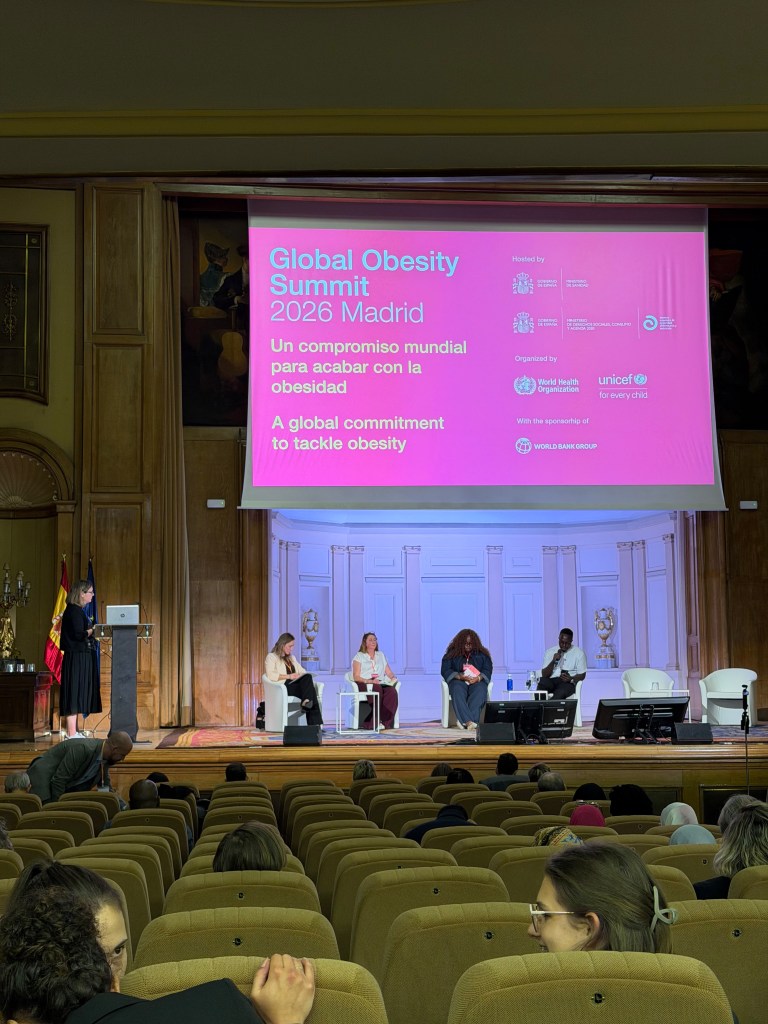
Invited by the World Health Organization (WHO), Stephen served as a moderator in the Summit’s Working Session 4, where Group 4 moved from identifying solutions to developing a practical roadmap for implementation. The discussions focused on how governments, civil society, academia and other partners can work together to accelerate action on obesity, with particular attention to planning, communication and safeguards for engagement with commercial actors.
The session built on the recommendations developed during the previous working session and contributed to the wider discussions that informed the Summit’s final declaration.
From recommendations to a roadmap for 2030
The working group had previously identified seven priorities for stronger stakeholder engagement: joint planning, tailored communication, properly resourced civil society participation, managing conflicts of interest, building champions, strengthening accountability and financing, and using technology to improve coordination.
In Session 4, participants began translating these priorities into a timeline for action. Time constraints meant that the group was able to develop three of the five proposed themes in detail: planning together, tailored communication, and managing industry engagement.
A key conclusion was that countries should build on existing institutional structures rather than create new ones unnecessarily. Participants proposed strengthening existing task forces, commissions and coordination platforms from 2027, widening their membership beyond health ministries to include finance, economy and tax authorities, as well as academia to strengthen the evidence base.
Engagement, the group agreed, should remain government-led, with clear responsibilities for each stakeholder and a shared understanding of how different actors contribute to national obesity priorities.
Putting young people and lived experience at the table
A major part of the discussion focused on ensuring that people living with obesity and young people are involved from the beginning of policy planning, rather than being consulted only after decisions have been made.
Participants called for lived-experience advocates to receive appropriate training so they can contribute effectively to policy and planning discussions, including communicating in ways that resonate with government decision-makers. Their involvement should be continuous, with governments also developing the skills needed to engage meaningfully with young people, patients and communities.
This approach recognises that people directly affected by obesity bring important knowledge about the barriers, experiences and realities that policies are intended to address. Their participation should therefore be part of how strategies are designed, implemented and evaluated.
Making public health communication work for different audiences
The group also emphasised that communication strategies must reflect the needs and priorities of the audiences they seek to influence.
Participants called for existing communication tools to be simplified and used more effectively, with immediate action beginning in 2027. Over approximately two years, countries should be supported with tools that demonstrate both the health and economic impact of obesity prevention and control.
The discussion highlighted the importance of framing messages around the best interests of the child, while using different communication channels to reach communities and decision-makers. This includes digital platforms, media engagement and direct, in-person communication.
The underlying message was that effective communication is not simply about making information available. It requires understanding what matters to each audience and presenting the case for action in language that connects with their priorities.
Strengthening safeguards for industry engagement
Managing commercial interests and conflicts of interest emerged as another important priority. Participants observed that many governments lack clear rules governing engagement with industry, leaving public institutions without consistent guidance on how to manage these relationships.
The group proposed several practical measures that countries could begin adopting. These included establishing a consistent position on conflicts of interest across government task forces, developing memoranda of understanding to guide industry engagement, and preparing investment cases that can respond to commercial arguments against public health measures.
Participants also called for a stronger health-sector voice in regulatory committees, ensuring that public health considerations are represented when decisions with implications for population health are made.
Civil society organisations were identified as important partners in monitoring industry conduct. Proposals included developing country-level industry interference indices, documenting practices such as greenwashing and pinkwashing, and classifying industries according to the health impacts of their products.
These measures would help strengthen transparency and give governments and communities better tools to identify and respond to practices that could undermine obesity prevention efforts.
Keeping countries connected beyond the Summit
While the group made progress on its immediate priorities, participants recognised that further work would be needed to complete the roadmap through to 2030.
Financing and accountability remained areas requiring additional discussion. The group therefore called for continued engagement beyond the Madrid Summit, including peer-to-peer learning and stronger regional platforms through which countries can exchange experiences, share implementation lessons and sustain momentum between global meetings.
The intention was to ensure that the Summit’s discussions would translate into continued collaboration rather than remain a one-off exercise.
Contributing to the Global Call for Accelerated Action
The 2026 Global Obesity Summit took place in Madrid from 26 to 28 October, co-hosted by the Ministry of Health of Spain, WHO, UNICEF and the World Bank. The meeting brought together governments, international organisations, civil society, academia, youth advocates and people with lived experience of obesity to review progress under the WHO Acceleration Plan to Stop Obesity (2022–2030) and identify priorities for accelerating action.
The recommendations from Group 4’s working sessions, alongside contributions from other groups, helped inform the discussions that led to the Summit’s final declaration, the Global Call for Accelerated Action to Stop Obesity, released on 28 October 2026.
For Ogweno Stephen, the two working sessions reflected the importance of moving beyond broad commitments towards practical systems for collaboration, accountability and implementation. His participation as a moderator and rapporteur brought the perspective of an African public health advocate and civil society leader into discussions on how global obesity priorities can be translated into action at country level.
Through his work with Stowelink Foundation and his wider engagement in non-communicable disease policy and obesity advocacy, Stephen has consistently contributed to efforts to strengthen community participation and ensure that people with lived experience have a meaningful role in shaping health responses.
The Madrid discussions reinforced an important principle: accelerating action on obesity requires more than government commitments. It requires institutions that can work across sectors, civil society that is recognised and resourced, communication that reaches the right audiences, and safeguards that protect public health decision-making. The challenge now is to turn these priorities into sustained action through 2030.

Leave a Reply